February 24th 2026
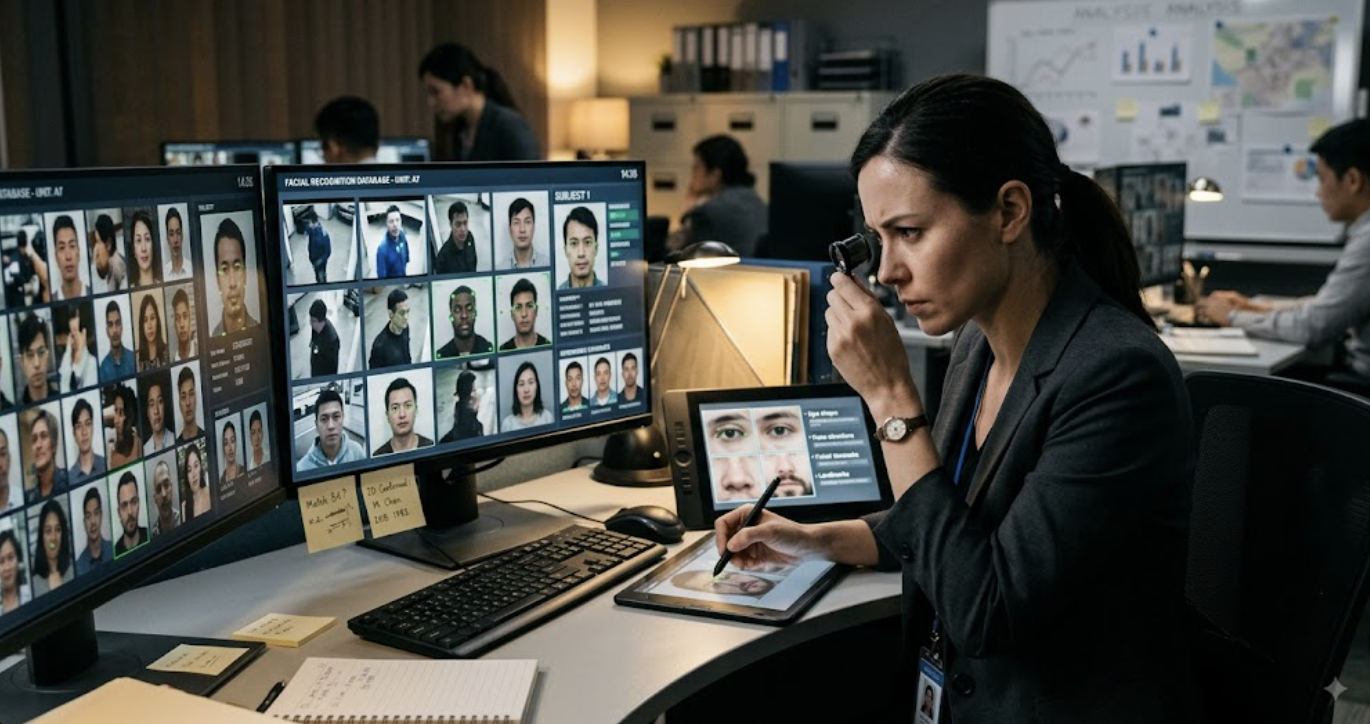
A recent study by the British Psychological Society (BPS) has tested whether individual differences in people’s facial recognition ability explain variations in telling AI from real faces.
The recent BPS study highlights two points that deserve attention beyond the headline:
The authors make a valuable contribution to cognitive science by showing that face‑identity expertise can be repurposed for deep‑fake detection, and that the “hyper‑average” signature is detectable at the algorithmic level. However, the practical message for the public is modest: even the best human detectors are only modestly above chance, and their advantage disappears when the faces become less extreme or when detection is required under time pressure.
What this means for anyone concerned about deep‑fakes—parents, students, professionals—is that relying on personal intuition or on a small cadre of experts will not provide the robustness needed in everyday life.
The phrase super‑AI‑face‑detector often conjures a plug‑and‑play shield that instantly blocks every synthetic image. In practice:
Super‑recognisers illustrate that human perceptual cues can complement algorithmic signals, but scaling that expertise to billions of users is unrealistic. The study’s “wisdom‑of‑the‑crowd” simulation shows that aggregating many highly trained observers can improve performance, yet it also underscores the cost of assembling such crowds in real time.
For parents, the most reliable safety net is early digital literacy. Children who learn to treat visual media as “claims that need evidence” are far less likely to be duped by a synthetic portrait, even if the portrait looks flawless.
December 16th 2025
Humanity has always invented and commoditised first, then made safe later. Like the car: from the appearance of the first widely-used models to the UK legislation enforcing seatbelts took nearly a century.
We can’t afford to repeat that mistake with AI Deepfakes.
Today deepfakes are indistinguishable from reality, are multi-modal across video, images and voice, and are non-binary (mixing real with fake elements) to help evade detection. For the first time in history, deepfake technology means that seeing or hearing isn’t believing. Neither can someone’s identity be determined anymore at face value.
Deepfake apps are already everywhere, invading every realm of digital life, from news to social media, from corporate vetting to university applications. Data show an exponential year-on-year rise in AI deepfakes and crime associated with them.
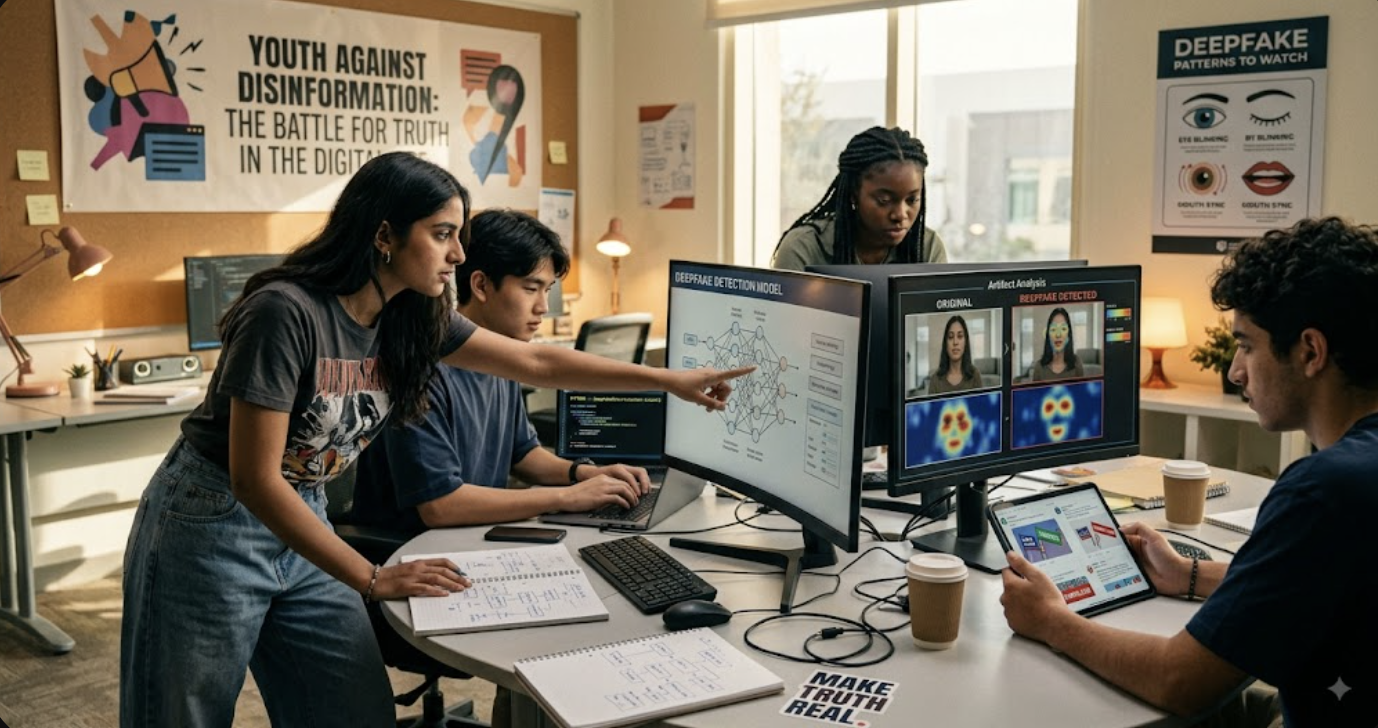
For young people, exposure to harmful synthetic content is now part of the fabric of life, as the apps used to make deepfakes are available without parental agreement protocols or age limitations. The apps are “gamified” in design, literally child’s play to use and mean that deepfake generation is both easy and fast. Our own testing has shown that even image generators that purport to have a strong anti-deepfake policy can be relatively easily subverted to generate deepfake images indistinguishable from the real thing.
Children and young people are more vulnerable to deepfake attacks than adults. They’re digitally literate, quick to learn how to use new technology and spend much of their lives engaging online. But their technical knowledge isn’t balanced by risk awareness. This often exacerbates the consequences of deepfake abuse.
The specific risks to children are significant. They include grooming and exploitation, non-consensual explicit content, blackmail and coercion, identity theft and fraud, social reputational damage, educational disruption, emotional trauma and ongoing distress.
Consequently an alarming rise in cyber-bullying using non-consensual sexual material has violated a whole generation of young people. The fear that parents and educators have is real; new research from VerifyLabs.AI has revealed that over a third (35%) of Brits said deepfake nudes (non-consensual intimate imagery) or videos of themselves or their child were what they feared most when it came to deepfakes.
Another survey from Censuswide found more than a quarter of children have seen a sexualised deepfake of a celebrity, friend, teacher or themselves. Just under half of young people think more needs to be done to ensure their online safety.
Current legislation hasn’t begun to tackle the issue. The UK still doesn’t have a single, overarching law specifically applied against deepfakes. Instead, it uses a patchwork of existing and new legislation to address specific harms caused by AI misuse, particularly in cases of non-consensual sexual content, fraud and harassment. This reactive, archaic stance continues to put individuals and society at great risk.
There’s an urgent need for legislation aimed at both companies producing AI-generated deepfake content and the digital platforms hosting it. There’s a concurrent need for legislation that supports and empowers victims in the digital space, including automatic reporting mechanisms and processes, a right to absolute and immediate deletion and compensation and support.

November 10th 2025
Last month, a European investment bank suffered a €2m loss after fraudsters deployed an AI-generated voice clone of its CEO to coerce a junior executive into transferring funds to a dummy account. This incident, far from isolated, underscores a chilling reality: deepfakes—AI-generated content that mimics humans—are no longer niche curiosities. For financial institutions they represent a potent threat to operational integrity, customer trust and regulatory compliance. Below, we outline 10 essential facts about deepfakes every banker must know.
Deepfakes demand a dual strategy: cutting-edge technology to detect fakes and rigorous human training and involvement to prevent them. For banks the stakes are clear: trust is the currency of the industry, and deepfakes threaten to devalue it. Using tools like VerifyLabs.AI Deepfake Detector can keep both your employees and your customers stay ahead of the curve.
While discussions about synthetic media often fixate on risks like deepfake technology and digital trust erosion, it is helpful to be aware of its transformative and beneficial applications. Ethical Generative AI is a profound tool for driving innovation, boosting efficiency and enhancing accessibility across commerce, education, and global entertainment.
AI is reshaping how content is crafted and shared, with synthetic media delivering dynamic, cost-effective solutions. Some of the ways it’s started to make an impact include:
Filmmakers and content creators now use AI voice cloning and lip-syncing technologies to automate voiceovers and dubbing into multiple languages. This accelerates global reach, brings down costs and can be an environmentally-friendly choice as it can reduce travel.
E-commerce and advertising are reaping significant benefits. Brands can generate synthetic models to showcase new clothing lines, personalise marketing campaigns at scale and create interactive ad experiences. These can be more easily tailored to individual consumer preferences—deepening engagement and building operational efficiency.
Ethical deepfakes are unlocking creative storytelling possibilities. For example, filmmakers can digitally “de-age” actors for films, while artists may reanimate historical figures’ voices for educational projects (with appropriate consent and licensing). These tools blend tradition and technology, expanding creative boundaries. Storytelling is one of the most fundamental of human activities and it has many social and therapeutic benefits. AI can be an ally in exploring these possibilities, and of reaching broader audiences than traditionally possible.
Deepfakes are a boon for learning environments, offering tools that enable immersive, customised experiences. They can be particularly helpful for engaging neuro-non-normative students, with endless creative applications.
Synthetic media allows the creation of AI-driven avatars and virtual tutors, delivering personalised, 24/7 learning experiences. This democratises content creation, helping bridge gaps in educational access and quality worldwide.
Companies and institutions can leverage synthetic media to generate highly realistic, controlled simulations for training. Scenarios like medical diagnostics or crisis management are now safer and more cost-effective than live-action alternatives, reducing risks while scaling expertise.
Studying how deepfakes are created is critical for building digital resilience. Students and researchers who understand deepfake mechanics develop sharper critical thinking skills.
To fully harness synthetic media’s benefits, establishing clear algorithmic authenticity is essential. Tools like VerifyLabs.AI’s Deepfake Detector play a pivotal role: they help to secure the ecosystem, enabling innovation to thrive while curbing misuse.
The future of Generative AI hinges on embedding transparency, accountability, and consent into its development. When synthetic content serves the common good, it drives the next wave of ethical, human-centric technological progress—benefiting individuals, businesses and society as a whole.
October 7th 2025
How do you navigate deepfake-enabled identity theft to secure your digital future?
In an era defined by rapid AI advancement, synthetic media—particularly deepfakes—has emerged as one of the most pressing threats to safety and security. While headlines often focus on political deepfakes, the surge in deepfake-enabled identity theft and synthetic fraud poses a far more pervasive and intimate danger. For both citizens and corporations, this “silent invasion” of digital identity and privacy isn’t okay on so many levels.
Deepfakes are transforming social engineering into a high-stakes cybersecurity challenge. Today, attackers use deepfake voice synthesis and fabricated video calls to mimic authority figures. Your CEO, family members and bank officials are all “fair game” to AI bad actors.
A particularly alarming trend is corporate vishing (voice phishing), where fraudsters impersonate senior executives to transfer large sums or disclose sensitive data. By exploiting the trust hard-wired through millennia of human evolution, these criminals bypass rational scepticism, turning routine communication into a vector for exploitation.
The integration of deepfakes into identity verification processes has exposed biometric security to critical vulnerabilities. Attackers now leverage deepfake face-swap fraud to bypass Know Your Customer (KYC) checks, gain unauthorised access to voice- or facial-recognition secured accounts, and even forge digital identities.
Traditional biometric measures are increasingly ineffective against AI-generated synthetic identities. To counter this, organisations must adopt next-generation detection layers, such as micro-expression analysis and behavioural biometrics, which add critical safeguards beyond static facial or voice scans.
Beyond financial harm, deepfakes threaten individual autonomy through severe privacy violations. Non-consensual deepfake pornography, defamatory content, and other malicious synthetic media primarily target women and minors, leading to irreversible reputational damage and profound psychological trauma. These acts not only breach ethics but also violate fundamental rights to control one’s digital image.
Beating deepfake threats requires a shift to proactive digital security. Individuals and organisations must adopt a Zero Trust architecture, assuming all digital content is at risk until verified. This framework prioritises continuous authentication and minimises trust in any single verification method.
Today, deepfake detection is non-negotiable. VerifyLabs.AI specialises in helping people to de-escalate deepfake risks, offering tools to instantly and accurately assess the algorithmic authenticity of digital content across channels—from social media to financial platforms. By using VerifyLabs.AI’s Deepfake Detector, you can take a critical step toward securing your digital likeness and assets. As deepfake technology advances, so too must our defences.
Prioritising synthetic fraud protection through Zero Trust practices and leveraging tools like VerifyLabs.AI’s deepfake detection will help you stay ahead of this silent invasion. Safeguarding your digital identity is no longer optional—it’s essential.
October 6th 2025
The rapid evolution of synthetic media—particularly deepfake technology—poses an existential threat to trust in digital society and, critically, to democratic processes worldwide. Video and audio recordings were once considered the gold standard of objective truth; today, they can be fabricated with unsettling realism using generative AI. For any organisation dedicated to maintaining digital integrity, understanding this threat is the first step toward building resilience.
Deepfake Democracy refers to the calculated use of fabricated media to influence political outcomes, sow discord or undermine public confidence. Malicious actors, both foreign and domestic, leverage deepfakes to:
The core threat here is the erosion of epistemic quality—the factual basis of public debate. When citizens cannot trust the evidence presented to them, rational discourse decays, leading to political instability and increased societal polarisation. If you keep up with the news through reputable channels, you’ll have noticed symptoms of this already. If you’re literate and educated, you’ll have a greater resistance to the erosion of factual quality than others, but everyone here is at risk.
Beyond politics, synthetic media accelerates the “post-truth” environment. The mere existence of deepfakes allows bad actors to strategically deflect blame and deny uncomfortable facts, leading to widespread doubt about all digital content.
It’s critical that society’s decision-takers understand how important deepfake detection is. Only through continuous technological advancement, education and awareness can we safeguard our future and contribute to a resilient global democracy.
August 27th 2025
What does it mean for your safety?
The headlines are full of deepfakes. You see them on the news and social media. But what are they, really? And why do they matter to you?
Deepfakes are fake videos, images, or audio created by artificial intelligence. They are so realistic that they can fool even the sharpest eye. The technology is advancing fast. It’s no longer just about funny celebrity videos. It’s now a tool for serious crime.
For years, we’ve relied on our senses. We believed what we saw and heard. That trust is now a weakness. Deepfake criminals exploit it, using synthetic media to impersonate people, from CEOs to grandparents.
Imagine this: you get a video call. It looks and sounds exactly like your boss. The voice has his accent. The face has his expressions. He says a new vendor needs a large, urgent payment. You trust him. You make the transfer. But it wasn’t him. It was a deepfake. The money is gone forever. You’re in complete disbelief, but this isn’t a movie; it’s your life and it’s already happened.
Or consider a more personal attack. A deepfake of a family member calls you. They appear to be in distress. They need money for a fake emergency that seems very real. They beg you not to tell anyone and because you’re you – loyal, generous, trusting, you don’t question it. You send the money.
Deepfake crime is growing. It’s not just about financial scams. Criminals use deepfakes for extortion, blackmail, political manipulation, intelligence gathering, social disruption, bullying and harassment. They can put anyone’s face on explicit videos. They can create fake recordings of people saying terrible things. The goal is to ruin reputations and in doing so they often ruin lives.
These attacks are devastating. Victims feel violated and alone. They face public shame and private torment. The fake “evidence” is so convincing that it’s hard to fight back, as proving that a video of you is fake is usually prohibitively expensive and slow.
The old rules of online safety don’t apply anymore. You can’t just look for typos or glitchy faces so you need new tools to fight new threats.
That’s where VerifyLabs.AI comes in. Our technology uses advanced AI to detect deepfakes to tell you in real-time if something isn’t human or made by one. Our tool looks for the subtle tells that the human eye misses. Things like inconsistent lighting, unnatural blinking or strange background noise. Our tools can tell you if a video, image, or audio file is real or fake in seconds.
This represents a revolution in personal agency for victims of deepfake attacks, who now have a way of testing a disproving images, video and audio in real-time, with around 98% accuracy. Our tool clearly labels the content it tests – so you can screengrab and publish your results, helping to break the momentum of a deepfake attack.
We believe in a world where you can trust what you see. We’re building the future of digital safety. The deepfake revolution is here, and now we’re fighting back.
August 11th 2025
In the age of social media and constant connectivity, the line between reality and deception is blurring. It’s a critical time for parents to understand what this technology is, how it’s being used for harm, and what proactive steps they can take to protect their children.
How does deepfake abuse happen?
Deepfakes are AI-generated or manipulated media that create highly realistic but entirely fabricated videos, images, or audio that purport to be of a real, living person. While deepfakes can be harmless, a malicious and growing trend involves the use of accessible AI tools—often free “nudify” apps—to manipulate everyday images of young people. These apps do not require technical skill. An abuser can take a photo of a student from social media or a school context and, within moments, create a convincing explicit image or video of that person.
Because deepfakes are by nature realistic, the damage from them is deeply personal and profound.
Even when the content emerges as fake, the victims—often young people—experience significant emotional distress, anxiety, a sense of violation and powerlessness.
This abuse can spread rapidly through social networks, turning a single act of manipulation into a school-wide crisis that can cause lasting psychological harm to the victim and create a climate of fear and mistrust for everyone.
What do parents need to know?
The best defence against deepfake abuse is a combination of open communication and proactive digital hygiene. Here is what every parent needs to know:
How can VerifyLabs.AI help?
At VerifyLabs.AI, we are committed to providing the tools necessary to combat this new wave of AI-driven deception. Our technology is designed to detect and verify manipulated media, giving individuals the power to identify and label deepfakes as false before they can cause harm.
Welcome, digital citizens! In a world where our lives are increasingly online, it’s more important than ever to know what’s real and what’s not.
You’ve probably heard the term “deepfake” floating around—perhaps in a news story, a viral video, or a cautionary tale. But what exactly are deepfakes, why are they such a big deal and most importantly, how can you protect yourself and your loved ones from their deceptive power? At VerifyLabs, we’re shining a light on this growing challenge and giving you the tools to navigate the digital landscape safely.
What exactly is a deepfake? It’s more than just a photoshopped image!
Think of deepfakes as super-advanced, AI-powered fakes. Unlike a simple Photoshopped image, which manipulates pixels, deepfakes use sophisticated artificial intelligence (AI) and machine learning to create entirely new, realistic-looking images, videos, or audio clips. They can make it appear as though someone said or did something they never did, often with alarming realism.
The “deep” in deepfake comes from “deep learning,” a branch of AI that uses neural networks to learn from vast amounts of data. In the case of deepfakes, an AI model might be fed thousands of images or hours of audio of a person. It then “learns” their facial expressions, voice patterns, and mannerisms so well that it can generate new content featuring that person doing or saying anything the creator desires. Scary, right?
Why are deepfakes such a big deal in 2025?
The deepfake landscape has evolved dramatically. In 2023, there were around 500,000 deepfakes shared. Fast forward to 2025, and projections suggest that this number could skyrocket to eight million. That’s a huge jump, and it tells us a few important things:
These advancements mean deepfakes are no longer just a novelty or a niche concern. They’re a mainstream tool, easily accessible to both sophisticated criminals and opportunistic bad actors.
The growing threat: where deepfakes cause trouble
Deepfakes are popping up in various unsettling ways, impacting individuals, businesses and even our society at large.
Protecting yourself and your loved ones: practical steps
While the landscape can seem daunting, there are practical steps you can take to become a more discerning digital consumer and protect yourself:
VerifyLabs.AI: trust, but Verify
At VerifyLabs.AI, we believe that everyone deserves to feel safe and confident in the digital world. That’s why we’ve developed an intuitive iOS app that puts sophisticated AI detection technology right in your pocket. With our clear “green circle” for human and “red square” for AI-generated content, we make it simple for you to verify images, videos, audio, and text in moments.
As deepfakes continue to evolve, so too will our technology. Stay informed, stay vigilant, and always verify first.
July 24th 2025
The threat of AI-driven deepfakes has escalated from a future concern to an immediate crisis, with incidents in the past month revealing an alarming acceleration in financial fraud and social engineering. A report updated this week highlights a staggering 680% year-over-year increase in deepfake activity targeting call centres, with experts forecasting a potential 162% surge in deepfake fraud in 2025 (Pindrop, July 16, 2025). This isn’t theoretical; financial institutions are now describing AI-impersonation as a “daily operational risk” (SecureWorld, July 18, 2025), fighting a constant battle against synthetic voices and video avatars designed to trick employees and customers alike.
Recent headlines show how widespread these attacks have become. In late June, a deepfake video of a former prominent fund manager was used in a Facebook ad to lure investors into a fraudulent WhatsApp group, garnering more than 500,000 views (EUobserver, July 15, 2025). This month has also seen a documented surge in retail-focused scams, with a McAfee report revealing that 39% of consumers have encountered deepfake scams during major sales events, often using fake celebrity endorsements to steal money and personal data (NDTV, July 9, 2025). These incidents prove that criminals are weaponising AI at scale, targeting individuals and corporations through the platforms we use every day.
As fraudsters bypass traditional security and exploit human trust, the need for advanced, real-time verification has never been more critical. Warnings from global banking-risk centres over the last few weeks confirm that old methods are failing to stop this new breed of hyper-realistic fraud (FAnews, July 17, 2025).
At VerifyLabs.AI, we are committed to staying ahead of this threat. Our tech is designed to detect AI-generated and deepfake identities, providing the essential layer of trust and security necessary to stay safe in an era where seeing and hearing is no longer believing.