September 22nd 2026
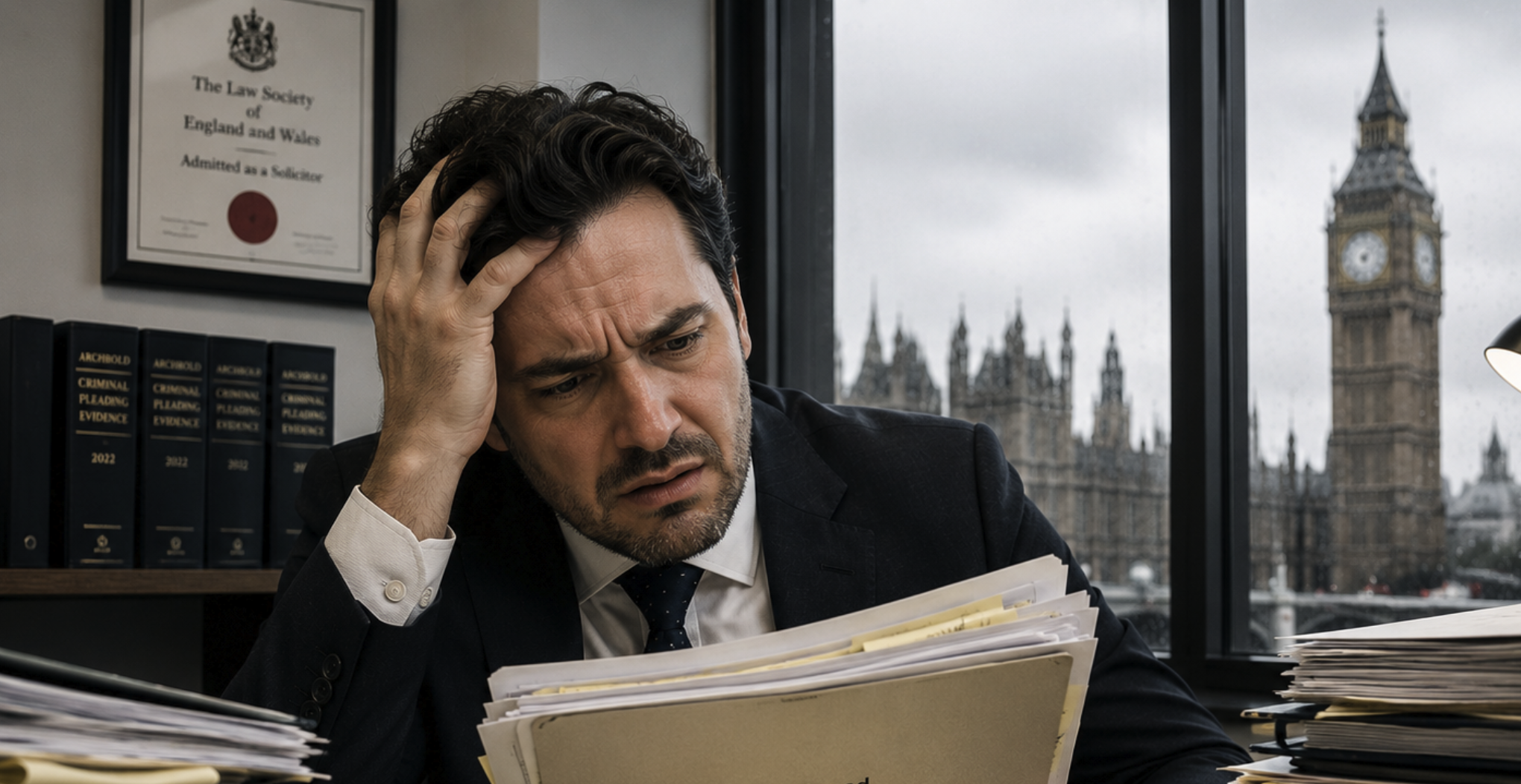
There was a time, not so long ago, when a familiar voice on the phone settled the matter. You knew your finance director’s laugh, your mortgage broker’s slightly weary “right then”, the particular way your chief executive clears her throat before saying something expensive. Recognition was a kind of security system, which served us well since the invention of the telephone.
That system has quietly been switched off. Most businesses simply haven’t noticed yet.
The voice you trust, annexed by someone else
Consider a couple in West Michigan. This month, Brian and Wendy VanDoeselaar lost their entire closing fund to scammers who combined AI voice cloning, spoofed email and spoofed caller ID to impersonate the mortgage professional they had been working with for weeks. The sum was $66,000. What undid them wasn’t carelessness. He heard a familiar voice, on a number that matched his lender’s, confirming wiring instructions that arrived in an email that looked right; three layers of fakery reinforced one another before any single one raised a flag.
If you’re tempted to think this only happens to ordinary people buying ordinary houses, look at who was targeted in August. A coordinated voice-phishing campaign went after several of Wall Street’s largest asset managers, using cloned voices to mimic the tone and phrasing of executives and colleagues in order to coax staff into surrendering credentials or granting system access. Two Sigma, Citadel, Point72 and Millennium Management all faced attempted breaches; Two Sigma confirmed it stopped the attack with no data compromised. These are firms with security budgets most of us can only dream of. The criminals clearly thought the clones were good enough to be worth the effort.
Where the money goes afterwards
Fraud is only half the story. Stolen money has to be washed, and deepfakes are increasingly how criminals get through the front door of the financial system in the first place. In February, a Ukrainian national pleaded guilty in the US to running OnlyFake, a site that generated and sold digital fake ID documents; prosecutors said it produced more than 10,000 fraudulent IDs, helping customers slip past Know Your Customer checks at banks and crypto exchanges. In the Netherlands, a case running through the Amsterdam courts involved a man who opened 47 fraudulent bank accounts by defeating a bank’s selfie-versus-ID onboarding check with deepfake and face-swap imagery.
The scale of what sits behind all this is sobering. INTERPOL’s Operation First Light, which ran from January to April this year, targeted social engineering scams and the money laundering around them, leading to 5,811 arrests and the interception of $293 million across 97 countries. In Thailand, investigators found the digital wallet of one suspect, aged just 20, had processed more than $122.5 million in ten months. In Eswatini, police uncovered a gang that had built a realistic replica of a Brazilian police station, complete with fake uniforms and signage, then posed as Brazil’s Federal Police on video calls to talk victims into moving money for “safekeeping”.
The carpentry involved sounds almost whimsical, until you realise that the most convincing deepfake scams merge real and synthetic content. AI bad actors are increasingly blending real and fake to make their “kills”.
Why “we’ll train our people to spot it” isn’t enough
The instinct of most organisations is to run an awareness session and hope for the best. The evidence is not kind to that plan. Veriff’s 2026 research, based on a survey of 3,000 people across the US, UK and Brazil, found that people are barely better than a coin toss at telling a real video or image from a fabricated one, with video the hardest format of all. In Britain specifically, 22% of people say they never verify suspicious content, the highest rate of any country surveyed.
Meanwhile the machinery of fraud is being industrialised. Entrust’s 2026 Identity Fraud Report, drawn from more than a billion identity-verification events, found that deepfakes now account for one in five biometric fraud attempts. Here at home, UK Finance reported payment fraud losses of £1.28 billion in 2025, with authorised push payment fraud up 19% to £576.4 million, and said organised criminal groups are increasingly using deepfakes, cloned voices and synthetic identities to impersonate trusted people and bypass identity checks.
The law has noticed, even if the boardroom hasn’t
This is where “optional extra” finally stops being a defensible position. In the UK, the failure to prevent fraud offence came into force on 1 September 2025 for large organisations, and a company can now be criminally liable for fraud committed for its benefit, including deepfake-enabled fraud, unless it can show reasonable prevention procedures were in place. Across the Channel, Article 50 of the EU AI Act has applied since 2 August 2026, and UK businesses serving EU customers fall within its scope.
Put plainly: when a deepfake gets through, the question will no longer be “how were you to know?” It will be “what did you have in place?”
What changes when you can check
None of this means abandoning a good process. Call-backs on known numbers, second sign-offs and a healthy scepticism about urgency all still matter. But process relies on someone deciding to be suspicious, and the whole art of a good deepfake is that it gives them no reason to be.
That is the gap a detector fills. VerifyLabs.AI was independently benchmarked in 2026 at 98% accuracy, runs without any API integration, and works across iOS, Android, desktop and Chrome, so the check can happen on the call, in the inbox or at onboarding, wherever the doubt arises. It won’t replace judgement. It gives judgement something solid to stand on again.
The familiar voice used to be the proof. Now it’s the question.
Sources
August 19th 2026
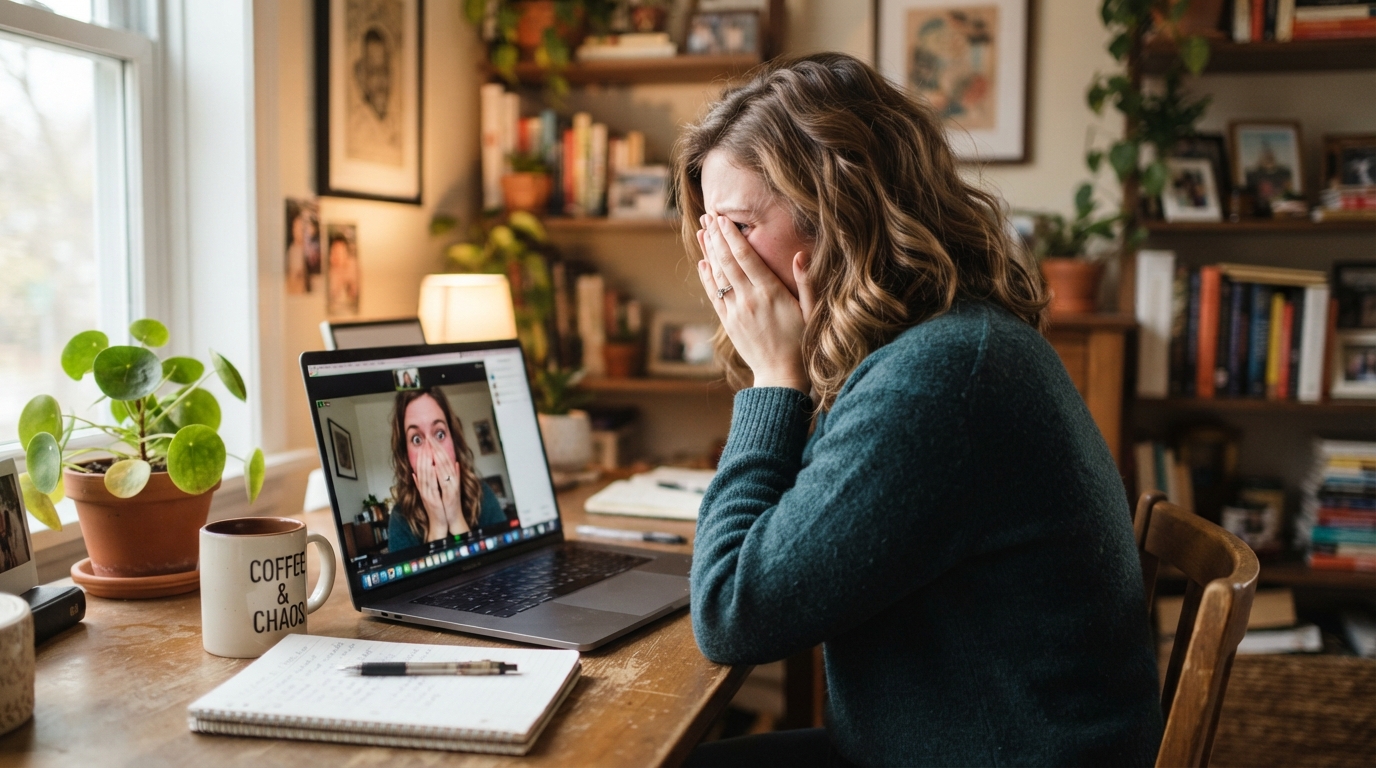
When we think of deepfake crime, we often focus on the financial loss or the political chaos. But the most painful damage is often personal. It’s the emotional and psychological toll on the victims. This is the unseen side of deepfake crime. Real people with real feelings, caught in an AI-powered nightmare.
Imagine waking up to a fabricated video of you that is being shared online. It’s a horrifying fake, designed to humiliate and destroy your reputation. It’s so realistic that your friends and family start asking if it’s true. The initial shock is followed by panic. You feel powerless. How do you fight something that isn’t real, but looks so real to everyone else?
The emotional consequences are severe. Victims report feeling:
For victims of non-consensual explicit deepfakes, the trauma is particularly profound. They are targeted, humiliated and often silenced as a reaction to the abuse. The legal system in most countries lags behind the pace of evolution of AI technology, leaving victims with few options for justice. Abusive, non-consensual content can “live” online forever, making survivorship difficult.
Deepfakes don’t just affect the direct victim. They create a ripple effect by damaging trust between people, communities and nations.
This particular kind of “trust trauma” is new to humankind, as it’s caused by a crime that targets and uses our fundamental human needs for attachment and authenticity. We’re now living in an age where seeing and hearing no longer equate to believing. This shift challenges how we interact with both people and institutions in this layer-cake of complexity.
At VerifyLabs.AI, we offer the tools to help you fight back. Our deepfake detector is a way to reclaim the truth by showing what’s real and what’s not, in real time by labelling fakes as fake. This can then be given to the relevant authorities, from school teachers to the police.
It’s an important step to a future where people don’t have to live in fear of what an algorithm might create.

August 11th 2026
There’s a particular feeling that visits a newsroom when a clip lands from somewhere nobody can quite vouch for. It’s twenty minutes to air. The pictures are extraordinary. Someone says, “It looks right to me.” Someone else says, “Where did it come from?” And a decision gets made, usually well, sometimes on instinct, always faster than anyone would like.
For most of the history of broadcasting, instinct was enough, because the pictures did the arguing for us. Film authenticated itself. You ran the tape and the tape was the evidence. That single assumption—that an image or audio of a thing was proof of the thing—held up the whole edifice: the correspondent to camera, the shaky phone footage from the front line, the recording that ended a career.
That assumption has quietly expired. Not in some distant future, and not only in elections and war zones. It has expired in the ordinary Tuesday-afternoon business of deciding what to put on air.
This is the finding I’d gently press on any editor who believes their people can spot a fake. In 2024, researchers pooled 56 studies covering more than 86,000 participants and found that human accuracy at identifying deepfakes came out at 55.54% — with confidence intervals crossing 50%, meaning performance was statistically indistinguishable from chance. Interestingly, people were rather better at recognising genuine material (68%) than fabricated material. We are, in other words, generously inclined to believe our eyes. (Diel et al., Computers in Human Behavior Reports, 2024)
I don’t offer that as an insult to anyone’s craft. It’s simply a fact about human perception, and it means that “our team is very experienced” is not a verification policy. It’s a hope, which won’t survive contact with a well-made synthetic video at ten to the hour.
Meanwhile the volume keeps climbing. One detection firm, IdentifAI, logged 3,165 deepfake incidents in March 2026 alone, against just four in January 2020 — a scale of increase that no fact-checking desk can absorb by working harder. (Digiday, April 2026)
Here is where it gets hopeful, oddly.
The Reuters Institute’s 2026 Digital News Report, drawn from nearly 100,000 people across 48 markets, makes for a bruising read at first glance. Trust in news has fallen to 37% — the lowest since measurement began in 2015 — declining in 29 of the 48 markets surveyed. Concern about fake news online has risen to 62% globally. In the UK it reaches 77%, with 73% of Britons saying they distrust news on social media. (Reuters Institute, June 2026)
Read those numbers again, though, and listen for what people are really saying. They are not telling us they’ve stopped caring about the truth. They are telling us they are frightened of being fooled, and that they don’t currently know who can help. Notably, the same report found trust in individual, well-used news brands has held up rather better than trust in “the news” as a category — audiences are still willing to distinguish between us and the noise.
That is not a death sentence. That is a demand signal, and it is the loudest one our industry has had in years.
Attention was the currency of the last two decades, and chasing it very nearly bankrupted us both commercially and, at times, morally. The currency of the next two decades is quieter and worth far more: the ability to say, with evidence, this is real, and here’s how we know. Understanding cannot survive without provenance. An audience that can’t tell the authentic from the synthetic doesn’t become better informed by consuming more of it. It becomes more confidently wrong, or it walks away altogether—and the 2026 data shows both happening at once.
We tend to picture the danger as the fake that slips through and gets published. That’s real, and it’s frightening.
But the deeper wound is what the legal scholars Bobby Chesney and Danielle Citron named the “liar’s dividend” in their 2018 paper for the California Law Review: once everyone knows anything can be faked, anything can be denied. Authentic footage of genuine wrongdoing gets waved away as AI. The guilty acquire a universal alibi. And the journalist who took a genuine risk to obtain that recording is left holding evidence that no longer functions as evidence. (Chesney & Citron, 2019)
Their unsettling observation was that the dividend grows as public awareness grows. The more we all learn about deepfakes, the more persuasive the denial becomes.
Detection guards both flanks. It stops the fabrication going out — and, just as importantly, it lets us stand behind real material under pressure with forensic analysis rather than wounded institutional insistence. In a world where denial costs nothing, being able to prove authenticity isn’t a defensive expense. It’s editorial firepower, and it protects our own people.
Excellence in journalism has always been asserted rather than measured. Awards, mastheads, decades of hard-won reputation. None of that travels well on a platform feed, where a national broadcaster and an anonymous account appear at precisely the same size. Where, in 2026, social media and video networks overtook news organisations’ own websites and apps as the way people reach news online.
Verification changes that, because verification can be shown. Detection results can be logged. Standards can be published. Chain of custody can be recorded from capture to broadcast and displayed to the audience on air, on the page, in the app, in the same spirit as a corrections column, which is one of the most trust-building things our industry ever invented. An outlet that shows its working turns credibility from a claim into a benchmark, and quietly invites everyone else to be measured against it.
One caveat, and I’d argue it belongs in any honest conversation about this: no detector is infallible, and anyone selling you certainty is selling the very thing that got us into trouble. Detection is an instrument, not an oracle. It belongs inside editorial process, in the hands of trained journalists, treated as strong evidence rather than a verdict. The outlets that get this right will be the ones candid about their confidence levels, as calibrated honesty is precisely what we’re asking our audiences to buy.
It’s tempting to file all this under media economics. I don’t think that’s quite right.
Societies make decisions about wars, elections, medicines, currencies, one another—on a shared factual floor. News organisations are among the last institutions with both the reach and the mandate to maintain it. The World Economic Forum’s Global Risks Report 2026 ranked misinformation and disinformation the second most severe short-term global risk facing the world, the third consecutive year these threats have sat near the top of the list. (WEF, January 2026)
If synthetic media dissolves that floor, the losses won’t be counted in subscriptions. They’ll be counted in the ordinary civic ability of people to agree on what happened yesterday.
That is the service. That is what a deepfake detector in a newsroom is actually for.
Every outlet will have one eventually, in the way every outlet eventually had a website. The only question worth asking is whether yours arrives early as a strategic asset, visible to your audience, central to how you describe yourself. Or whether it arrives as an emergency purchase, made the morning after you broadcast something that wasn’t true.
I’d rather we chose the first. We have done harder things than this, and we have rarely had a clearer invitation from the people we serve.

June 8th 2026
Design that keeps people safe, that helps them navigate safely through a threat landscape. Now that’s not just art, but applied insight.
Every part of our brand is simple, human and friendly. It works hard so you don’t have to. After all, when you’re checking for deepfakes the last thing you need is distraction.
We’d love to hear what you think. Whether you’re using it on iOS, Android or Chrome, get in touch and tell us what you think!

Deepfakes are proving to be tricky adversaries
In a 2023 London High Court case, a defence lawyer argued that a surveillance video of their client was a deepfake, delaying proceedings for six weeks. The incident, though resolved in the prosecution’s favour, highlighted a pressing issue: deepfakes are complicating legal processes, from evidence authentication to contract validity. Below, we outline 10 critical facts legal professionals must grasp.
Deepfakes aren’t just a technological challenge—they’re a legal one. For lawyers and courts, the task is twofold: to authenticate evidence rigorously and to shape laws that deter misuse.
February 24th 2026
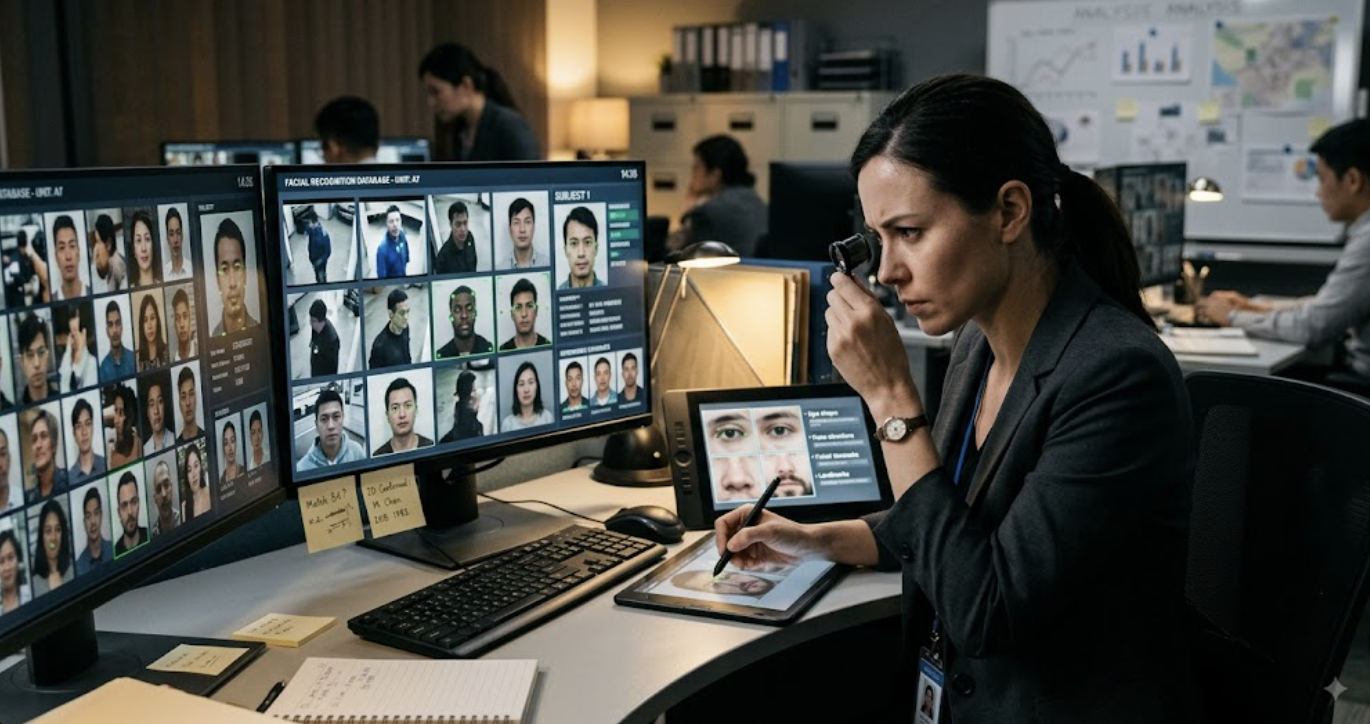
A recent study by the British Psychological Society (BPS) has tested whether individual differences in people’s facial recognition ability explain variations in telling AI from real faces.
The recent BPS study highlights two points that deserve attention beyond the headline:
The authors make a valuable contribution to cognitive science by showing that face‑identity expertise can be repurposed for deep‑fake detection, and that the “hyper‑average” signature is detectable at the algorithmic level. However, the practical message for the public is modest: even the best human detectors are only modestly above chance, and their advantage disappears when the faces become less extreme or when detection is required under time pressure.
What this means for anyone concerned about deep‑fakes—parents, students, professionals—is that relying on personal intuition or on a small cadre of experts will not provide the robustness needed in everyday life.
The phrase super‑AI‑face‑detector often conjures a plug‑and‑play shield that instantly blocks every synthetic image. In practice:
Super‑recognisers illustrate that human perceptual cues can complement algorithmic signals, but scaling that expertise to billions of users is unrealistic. The study’s “wisdom‑of‑the‑crowd” simulation shows that aggregating many highly trained observers can improve performance, yet it also underscores the cost of assembling such crowds in real time.
For parents, the most reliable safety net is early digital literacy. Children who learn to treat visual media as “claims that need evidence” are far less likely to be duped by a synthetic portrait, even if the portrait looks flawless.
December 21st 2025
Schools, universities and learners: it’s time to get your facts straight
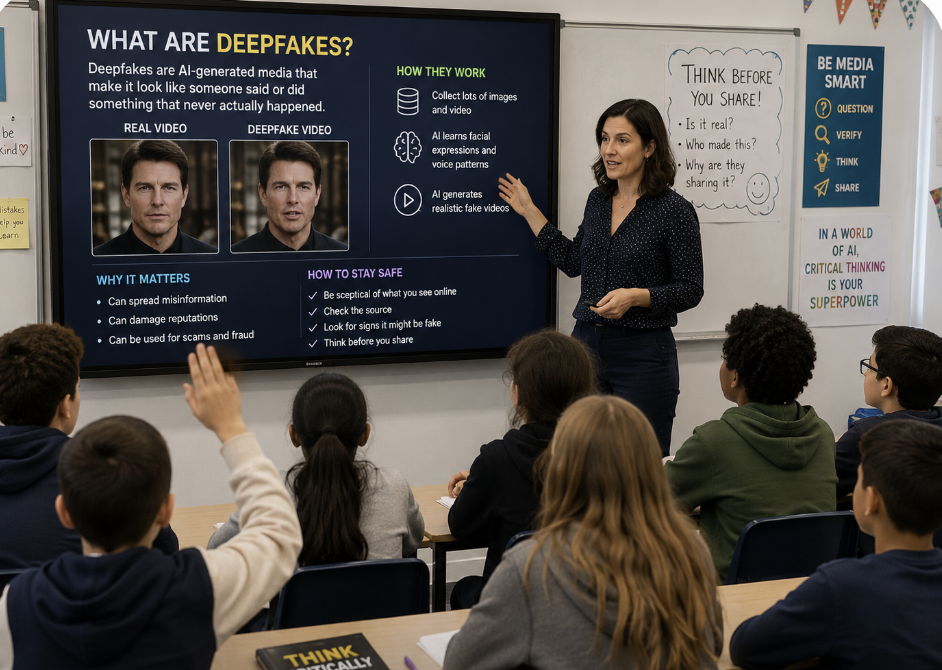
Earlier this year, a student at the University of Edinburgh submitted a deepfake video of themselves delivering a final presentation—only for AI detection software to flag inconsistencies. The incident, though minor, revealed a stark truth: deepfakes are infiltrating classrooms, threatening academic integrity and reshaping how institutions assess learning. Here, we detail 10 critical insights for educators and learners alike.
Deepfakes challenge education’s core purpose: to foster critical thinking and truth-seeking. By updating policies, training staff and adopting robust verification tools, institutions can protect academic rigor. VerifyLabs.AI’s Deepfake Detector helps people stay on track—so learning can stay authentic.
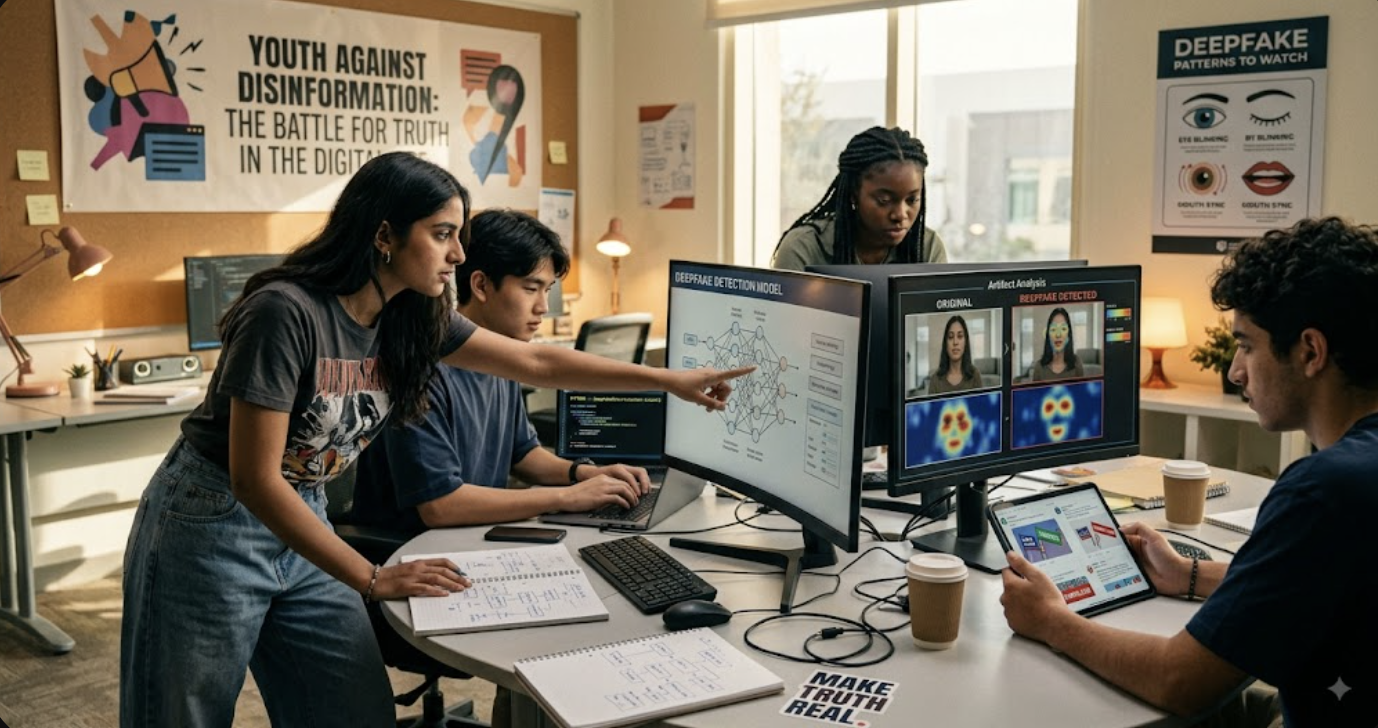
December 16th 2025
Humanity has always invented and commoditised first, then made safe later. Like the car: from the appearance of the first widely-used models to the UK legislation enforcing seatbelts took nearly a century.
We can’t afford to repeat that mistake with AI Deepfakes.
Today deepfakes are indistinguishable from reality, are multi-modal across video, images and voice, and are non-binary (mixing real with fake elements) to help evade detection. For the first time in history, deepfake technology means that seeing or hearing isn’t believing. Neither can someone’s identity be determined anymore at face value.
Deepfake apps are already everywhere, invading every realm of digital life, from news to social media, from corporate vetting to university applications. Data show an exponential year-on-year rise in AI deepfakes and crime associated with them.
For young people, exposure to harmful synthetic content is now part of the fabric of life, as the apps used to make deepfakes are available without parental agreement protocols or age limitations. The apps are “gamified” in design, literally child’s play to use and mean that deepfake generation is both easy and fast. Our own testing has shown that even image generators that purport to have a strong anti-deepfake policy can be relatively easily subverted to generate deepfake images indistinguishable from the real thing.
Children and young people are more vulnerable to deepfake attacks than adults. They’re digitally literate, quick to learn how to use new technology and spend much of their lives engaging online. But their technical knowledge isn’t balanced by risk awareness. This often exacerbates the consequences of deepfake abuse.
The specific risks to children are significant. They include grooming and exploitation, non-consensual explicit content, blackmail and coercion, identity theft and fraud, social reputational damage, educational disruption, emotional trauma and ongoing distress.
Consequently an alarming rise in cyber-bullying using non-consensual sexual material has violated a whole generation of young people. The fear that parents and educators have is real; new research from VerifyLabs.AI has revealed that over a third (35%) of Brits said deepfake nudes (non-consensual intimate imagery) or videos of themselves or their child were what they feared most when it came to deepfakes.
Another survey from Censuswide found more than a quarter of children have seen a sexualised deepfake of a celebrity, friend, teacher or themselves. Just under half of young people think more needs to be done to ensure their online safety.
Current legislation hasn’t begun to tackle the issue. The UK still doesn’t have a single, overarching law specifically applied against deepfakes. Instead, it uses a patchwork of existing and new legislation to address specific harms caused by AI misuse, particularly in cases of non-consensual sexual content, fraud and harassment. This reactive, archaic stance continues to put individuals and society at great risk.
There’s an urgent need for legislation aimed at both companies producing AI-generated deepfake content and the digital platforms hosting it. There’s a concurrent need for legislation that supports and empowers victims in the digital space, including automatic reporting mechanisms and processes, a right to absolute and immediate deletion and compensation and support.

November 10th 2025
Last month, a European investment bank suffered a €2m loss after fraudsters deployed an AI-generated voice clone of its CEO to coerce a junior executive into transferring funds to a dummy account. This incident, far from isolated, underscores a chilling reality: deepfakes—AI-generated content that mimics humans—are no longer niche curiosities. For financial institutions they represent a potent threat to operational integrity, customer trust and regulatory compliance. Below, we outline 10 essential facts about deepfakes every banker must know.
Deepfakes demand a dual strategy: cutting-edge technology to detect fakes and rigorous human training and involvement to prevent them. For banks the stakes are clear: trust is the currency of the industry, and deepfakes threaten to devalue it. Using tools like VerifyLabs.AI Deepfake Detector can keep both your employees and your customers stay ahead of the curve.

October 13th 2025